

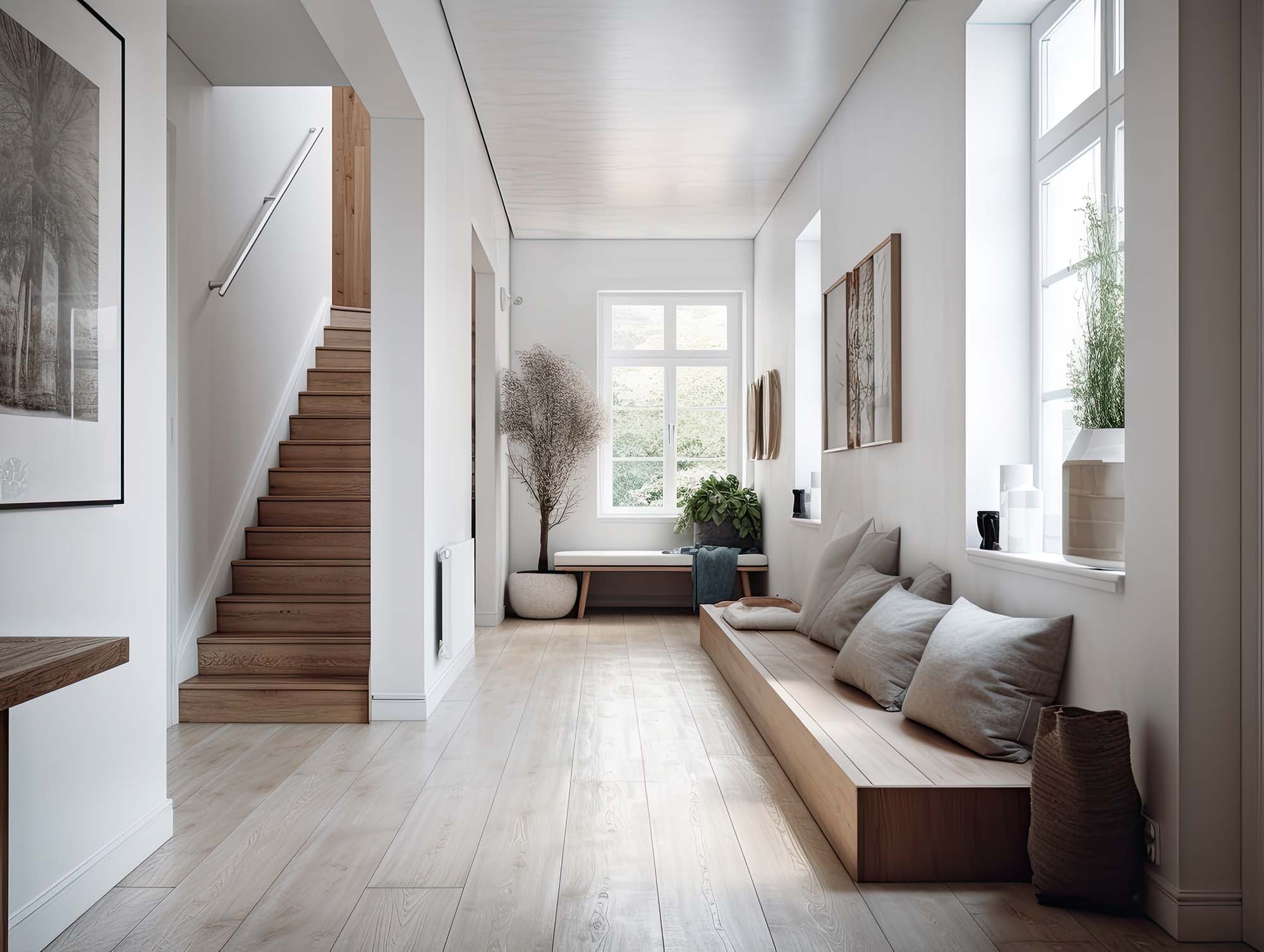
Hardwood brings a warmth that is difficult to reproduce. It has natural grain, subtle variation, and a surface that can become part of a home's character for decades. The decision is not simply whether you like wood. It is whether solid hardwood flooring or engineered hardwood flooring makes more sense for your rooms, subfloor, and long-term plans. Both use real wood at the surface, but their construction changes how they respond to moisture and temperature.
What Makes Solid and Engineered Hardwood Different?
Solid hardwood flooring is milled from a single piece of wood. Each board is made from one species, such as oak, maple, or hickory. Because the plank is solid wood, it can typically be sanded and refinished multiple times during its service life. Engineered hardwood flooring has a real wood veneer bonded to a layered core. The core may use plywood or other wood-based materials, depending on the manufacturer.
These layers are arranged to improve dimensional stability, while the top veneer provides the appearance and feel of the selected species. Engineered does not mean imitation wood. The visible surface is genuine hardwood. Once installed, the two types can look remarkably similar. Species, stain, plank width, and finish shape the appearance.
How Each Type Handles Humidity and Temperature
Wood naturally responds to changes in moisture. When indoor humidity rises, boards can absorb moisture and expand. When conditions become drier, they can release moisture and contract. Seasonal movement is normal, but large swings can contribute to gaps, cupping, or other problems.
Solid boards tend to move more across their width because each plank is one continuous piece of wood. That makes stable indoor conditions and correct installation especially important. Solid hardwood is often a strong choice for above-grade living areas where the subfloor and indoor environment meet the product requirements.
Engineered boards are designed to reduce movement through their layered construction. They are often suitable for a wider range of installations, including some concrete slabs and below-grade spaces, when the specific product is approved for those conditions. This stability is helpful, but it does not make engineered wood waterproof or immune to moisture damage. A wet slab, plumbing leak, or persistently damp room can still harm the floor.
Refinishing, Durability, and Daily Care
One of solid hardwood's biggest advantages is its refinishing potential. A sufficiently thick solid board can often be sanded and refinished more times than an engineered board. This can be valuable when owners expect to change stain colors or keep the floor for generations.
Engineered hardwood can also be refinished, but the number of times depends on the thickness of its real-wood wear layer. Some products have a veneer that allows limited refinishing; others are designed primarily for maintaining the factory finish rather than repeated sanding. Ask for the actual veneer thickness and written manufacturer guidance instead of relying on the word "engineered."
Both types need sensible care. Remove grit, wipe spills promptly, use finish-approved cleaners, and place protective pads under furniture. Avoid wet mopping or steam cleaning unless the manufacturer permits it. Use mats at exterior entrances, but choose rug pads that are compatible with the floor finish. A durable factory finish resists everyday wear, but high heels, pet claws, furniture, and dropped objects can still mark real wood. Species hardness also affects dent resistance.
Installation and Where Each Floor Fits
Solid hardwood is commonly nailed or stapled to an approved wood subfloor. It is generally not the default choice for below-grade rooms or direct installation over concrete. Engineered hardwood may be installed by floating, gluing, or fastening, depending on its construction and the manufacturer's instructions.
Some products are approved for concrete slabs, while others are not. Slab moisture testing and any required moisture-control system are essential. Never assume that a product is suitable for a basement simply because it is engineered.
Before choosing, consider:
Room location: Above-grade bedrooms and living spaces may suit either type; slab and below-grade projects often call for approved engineered products.
Subfloor: Wood and concrete present different installation requirements.
Indoor climate: Stable temperature and humidity help both floors perform.
Future refinishing: Solid wood usually offers more opportunities, but engineered veneer thickness varies.
Budget: Compare the full installed cost, including preparation, adhesives or underlayment, trim, and transitions.
Which Hardwood Is the Better Investment?
Choose solid hardwood when you value a traditional construction, broad refinishing potential, and have a suitable above-grade installation. Choose engineered hardwood when you want genuine wood with greater dimensional stability or need an installation method that fits a particular subfloor. Neither is automatically superior. The right product is the one whose specifications match the conditions in your home.
A flooring consultation can clarify slab moisture, board width, and refinishing limits. Contact the team at R&S Flooring to talk through your project, then visit our showroom in Brentwood, and Nashville, TN to compare real wood species, finishes, and plank styles before making your decision.


